
What's the Secret to Perfect Cup Lids Matching?
There's nothing more frustrating than a takeaway drink leaking during your commute, a lid popping off at a party, or a mismatched cup-lid combo compromising drinking safety. For both businesses and everyday users, poor compatibility between cup lids (especially plastic cup lids) and cups not only ruins the drinking experience but also damages brand reputation, wastes beverages, and creates unnecessary waste. Therefore, learning how to match PET cups with PET lids and PP cups with PP lids is crucial. Compared to mixing different materials, this same-material pairing offers superior leak-proof sealing, easier recycling, and better compatibility than mixed-material options. In this guide, you'll learn a clear 5-step matching method to easily find the right cup lids for PET/PP cups, along with professional tips to avoid common mistakes and improve efficiency. Whether you're a café owner (in need of bulk disposable cup lids), event planner, or simply someone who hates spilled drinks, this compatibility guide will completely solve your plastic cup lid matching problems.
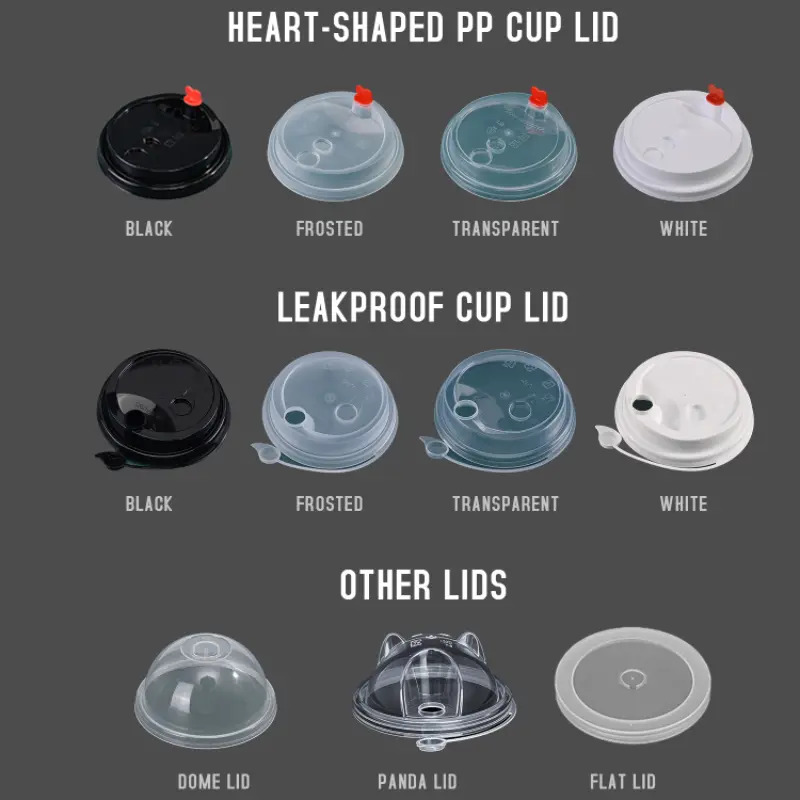
PP cup lids
Why Same-Material Lids (PET-PET & PP-PP) Matter
Choosing cup lids made of the same material as the cups is not a random choice—it's a practical necessity related to performance, safety, and sustainability, especially when selecting plastic cup lids.
First, same-material cup lids deliver unbeatable sealing performance. PET (Polyethylene Terephthalate) and PP (Polypropylene) variants have different flexibility, heat resistance, and shrinkage rates. When a PET cup is paired with PET cup lids, the materials expand and contract evenly with temperature changes, creating a tight, seamless seal that effectively prevents leaks. In contrast, pairing PP cup lids with a PET cup—especially for hot drinks—often leads to loose fits or deformation, as PP variants have a higher heat resistance limit (up to 100°C) than PET ones (up to 70°C).
Second, safety and sustainability are non-negotiable. PET cup lids offer significant recycling advantages: PET cups and their matching lids share the same resin code (PET=1) and can be recycled together in most curbside recycling programs. The compatibility of PP cups and PP cup lids follows the same logic—PP variants have a resin code of 5, which is widely accepted in recycling systems. Maintaining material consistency avoids contaminating recycling streams. Mismatched plastic cup lids, however, often end up in landfills because recycling facilities struggle to efficiently separate mixed-plastic options.
Finally, same-material pairing enhances durability. PP cup lids are inherently sturdier, making them ideal for pairing with rigid PP cups—they won't crack when pressed onto thick PP cup rims. On the other hand, PET cup lids have just the right flexibility to fit tightly against the smooth rim of PET cups, ensuring they stay securely in place. Compared to mixed-material plastic cup lids, same-material options have a longer service life and better performance, especially as disposable cup lids.
5-Step Guide to Precisely Matching PET/PP Cups with Lids
Step 1: Identify the Cup Material (PET vs. PP)
Before choosing cup lids (whether PET cup lids or PP cup lids), you need to confirm whether the cup is made of PET or PP—here are three simple methods to accurately identify them.
- Check the bottom resin code: Look for the triangular recycling symbol on the bottom of the cup. PET cups are marked with "1" (resin code for PET, matching PET cup lids), while PP cups are marked with "5" (resin code for PP, matching PP cup lids). This is the fastest and most accurate way to distinguish between the two, helping you lock in the right material.
- Compare touch and appearance: PET cups are typically transparent, glossy, and slightly rigid—they feel smooth but can crack if bent sharply, and their matching PET cup lids are also usually transparent. PP cups are mostly opaque (some styles are translucent), have a matte finish, and are more flexible and tough—they won't crack easily when squeezed, and their corresponding PP cup lids often have a matte texture too.
- Perform a simple heat test: PP has good heat resistance (up to 100°C). Pour boiling water into a PP cup and let it sit for 10 seconds—it won't deform, and its matching PP cup lids can also withstand the same temperature (suitable for hot drinks). However, PET cups will soften or deform when exposed to boiling water, and their PET cup lids are also not heat-resistant (better for cold drinks as disposable cup lids). This test is very useful if the resin code is missing from the cup bottom.
Step 2: Choose Lids of the Corresponding Material (PET Lids for PET Cups, PP Lids for PP Cups)
Once you've identified the cup material, select cup lids of the same material—this is the core of matching PET cups with PET cup lids and PP cups with PP cup lids.
For PET cups: Choose PET cup lids. They are designed to fit the smooth, rigid structure of PET cups and are best for cold drinks (soda, iced coffee, smoothies, etc.) because PET material is not heat-resistant. Common types include flat lids (for direct drinking), dome lids (for cream or toppings), and straw lids (with pre-cut straw holes). They are lightweight, transparent, and blend perfectly with transparent PET cups, making them great for takeaway use as disposable cup lids.
For PP cups: Choose PP cup lids. They are thicker, sturdier, and heat-resistant, making them suitable for both hot drinks (coffee, tea, hot chocolate) and cold drinks as plastic cup lids. They are often used as straw lids for takeaway drinks—their sturdiness prevents straws from slipping or lids from collapsing. Using matching material ensures the lid can withstand the same temperature range as the cup, avoiding deformation or leaks.
When choosing cup lids, always prioritize "material matching"—even if the plastic cup lids size is correct, mixing materials will affect performance, especially for bulk disposable cup lids.
Step 3: Check Lid Size and Fit (Avoid Leaks)
Material matching is the foundation, but size compatibility is equally critical for achieving a leak-proof seal with cup lids (including PET cup lids and PP cup lids).
- Measure the cup rim diameter: Use a ruler to measure the outer diameter of the cup rim. Common sizes for takeaway cups are: large cups (16-24 oz) with a diameter of 8-9 cm (3.1-3.5 inches), and small cups (8-12 oz) with a diameter of 7-8 cm (2.8-3.1 inches). This standard helps you select well-fitting options, avoiding leaks from size mismatches—essential when buying plastic cup lids in bulk.
- Manually test lid fit: Place the cup lids on the cup rim and press firmly along the edges. They should fit flat without gaps, and the cup should not fall off when you gently lift the lids. For rolled-rim cups, ensure the inner groove of PET cup lids or PP cup lids aligns with the cup's rolled rim—this creates a tighter seal than flat-rim cups, reducing leak risks for disposable cup lids.
- Pay attention to cup design details: Some cups have a "lip" or "ridge" on the rim—choose cup lids with a corresponding groove to achieve a locking effect. Avoid plastic cup lids that are too tight (they will tear the cup rim) or too loose (they will leak immediately). Precision is key—even a 0.5 cm difference can cause leaks, especially for bulk options.
Step 4: Test Sealing Performance
A simple seal test can verify whether PET-PET or PP-PP pairings are truly leak-proof—vital for checking disposable cup lids in bulk.
- Fill the cup ¾ full with liquid: Use water (or a liquid similar to the intended drink, such as coffee or soda) to simulate real usage, ensuring the test matches how you'll use the lids (e.g., PET cup lids for cold drinks, PP cup lids for hot drinks).
- Secure the lid tightly: Press firmly along the edges of the cup lids to ensure they fit completely over the cup rim without gaps—this is the key step to prevent plastic cup lids from leaking.
- Invert the cup for 30 seconds: Hold the cup upside down over a sink or towel. If no liquid leaks out, the lids have a good seal and are suitable for use as disposable cup lids.
- Gently shake the cup: For extra assurance, shake the cup gently from side to side. If no liquid leaks and no air escapes, the cup lids and cup are perfectly matched.
Studies show that same-material pairings have a 60% higher leak-proof success rate than mixed-material ones. This test is particularly important for businesses—a single spilled drink can lead to customer complaints or wasted inventory, especially with bulk cup lids.
Step 5: Confirm Recycling Methods and Usage Scenarios
The final step is to optimize cup lids pairing based on usage needs (such as whether to use them as disposable cup lids) and recycling goals.
- Recycle correctly: PET cups and PET cup lids can be recycled together (resin code 1) and placed directly in the same recycling bin. PP cups and PP cup lids (resin code 5) should also be recycled together, though some facilities require separating PP variants—always check your local recycling guidelines, especially for bulk disposable cup lids.
- Match to drink temperature: For cold drinks, PET-PET pairings are recommended (PET cup lids are not heat-resistant, ideal as cold drink disposable cup lids). For hot drinks, PP-PP pairings are better (PP cup lids' heat resistance prevents deformation). For drinks that switch from hot to cold (like coffee served hot then iced), PP-PP pairings are the safer choice to avoid lid failure.
- Consider usage frequency: For single-use scenarios (takeaway, events), both PET-PET and PP-PP cup lids work—just ensure proper recycling of disposable cup lids. For reusable PP cups, pair them with reusable PP cup lids to maximize durability and reduce plastic cup lids waste.
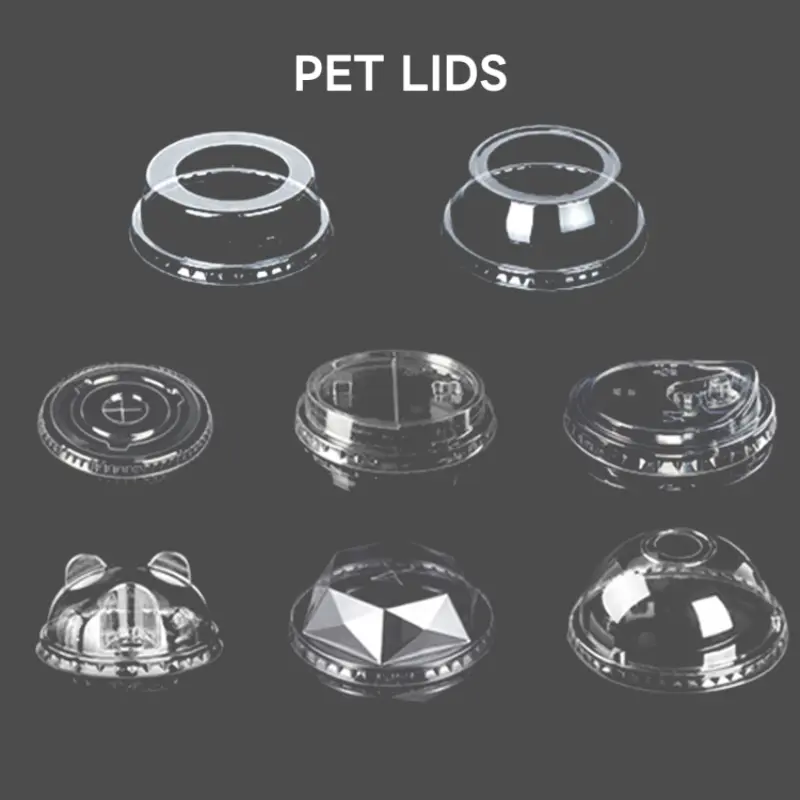
PET cup lids
Professional Tips for Perfect PET/PP Cup-Lid Matching
- Choose one-stop bundled sets: Many suppliers offer bundled sets of PET cups with PET cup lids and PP cups with PP cup lids. These sets ensure 100% compatibility without the need for separate matching, making them ideal for businesses buying disposable cup lids in bulk to save time and reduce errors.
- Avoid using PP lids on thin-walled PET cups: PP cup lids are sturdier than PET cup lids. Pressing them onto thin-walled PET cups' rims may cause the rims to crack or deform. Thin-walled PET cups should be paired with PET cup lids to protect the cup structure, especially when used as disposable cup lids.
- Store lids separately by material: Keep PET cup lids and PP cup lids in separate containers to avoid confusion. Label the containers with their resin codes (1 for PET, 5 for PP) and "cup lids" (e.g., "PET Cup Lids - Cold Drinks Only") for quick identification—helpful when managing bulk plastic cup lids.
- Leverage the properties of PET and PP: For cups with brand logos, PET-PET pairings highlight colorful designs through transparent PET cup lids. PP-PP pairings with durable PP cup lids are suitable for high-frequency use scenarios like cafes and events, reducing lid replacement costs.
Common Mistakes to Avoid When Matching Cup Lids
- Blindly mixing materials (e.g., PP lids with PET cups): This is the most common compatibility mistake. Even if plastic cup lids size is correct, PP cup lids and PET cups'different thermal expansion rates cause leaks or lid failure over time—always check material first, especially for bulk disposable cup lids.
- Focusing only on size and ignoring material: A lid that fits in diameter but is made of the wrong material (like PET cup lids on PP hot drink cups) will never seal as well as same-material options. Don't cut corners—size and material are equally important for plastic cup lids.
- Using low-quality plastic lids: Cheap recycled plastic cup lids (especially mixed-plastic ones) often have inconsistent thickness and shape, leading to poor fit and potential safety hazards (e.g., harmful chemical leaching). Choose high-quality options that match the cup's material and thickness, such as food-grade PET cup lids or PP cup lids—critical for disposable cup lids touching food.
- Ignoring cup rim design: Flat-rim and rolled-rim cups need different cup lids. Using rolled-rim PET cup lids or PP cup lids on flat-rim cups creates gaps—always ensure the lid's rim design matches the cup's to avoid disposable cup lids leaks.
Real Case: How Correct Pairing Reduces Costs
A small bubble tea shop in Chicago once faced a problem: 15% of its takeaway orders received complaints about leaking drinks. The issue? To "save on lid inventory costs," the shop used PP cup lids (meant for PP cups) on PET cold drink cups as disposable cup lids, leading to widespread leaks. After switching to PET cup lids for cold drinks and PP cup lids for hot drinks (PET-PET and PP-PP pairings), the leak complaint rate dropped to 3% in just one month.
The cost savings were significant: monthly waste from spilled drinks (and remaking orders) decreased by 150, and customer satisfaction scores increased by 25%. Additionally, proper recycling of same-material pairings qualified the shop for a local recycling rebate, saving an extra 50 per month. This case proves that correct cup lids pairing helps businesses reduce costs, improve customer experience, and minimize waste.
FAQ: PET/PP Cup-Lid Matching
Q1: Can I use PP lids with PET cups (or vice versa)?
We do not recommend mixing PET and PP cup lids. PET and PP have different thermal expansion coefficients. When drink temperature changes (e.g., cold drinks warming up, hot drinks cooling down), the materials expand or contract at different rates, creating gaps between lids and cups. This leads to leaks, lid deformation, or even cup damage. Furthermore, deformed cup lids may leach chemicals into drinks over time, compromising safety. The risks of mismatched plastic cup lids far outweigh the convenience.
Q2: Are all PET lids compatible with all PET cups?
No. While material matching is essential, compatibility between PET cup lids and PET cups also depends on size and cup design. Large PET cup lids won't fit small PET cups, and straw variants designed for rolled-rim cups won't seal on flat-rim ones. For PET cup lids to fit, their size must match the cup's rim diameter, and their groove design must align with the cup's rim type. Always check both material and size before purchasing, especially bulk disposable cup lids.
Conclusion & CTA
Matching PET cups with PET cup lids and PP cups with PP cup lids is not complicated. By following the 5-step process (identify cup material → choose corresponding lid material → check size fit → test sealing performance → confirm recycling methods and usage scenarios), you can achieve leak-proof, sustainable, and cost-effective results. Same-material pairing not only solves spilled drinks but also enhances brand trust, reduces waste, and saves costs long-term.
Now is the time to put this knowledge into practice. Whether you're restocking your café's disposable cup lids or upgrading your home takeaway setup, prioritize same-material pairings. If your business needs custom-matched sets, please contact our team—we'll help you find the perfect plastic cup lids solution for your brand. With the right method, matching PET and PP cup lids will become second nature, and you'll never have to deal with mismatched, leaky cups again.