
Why Your Coffee Lids Leak: The Truth Behind PET Cup Rim Fit
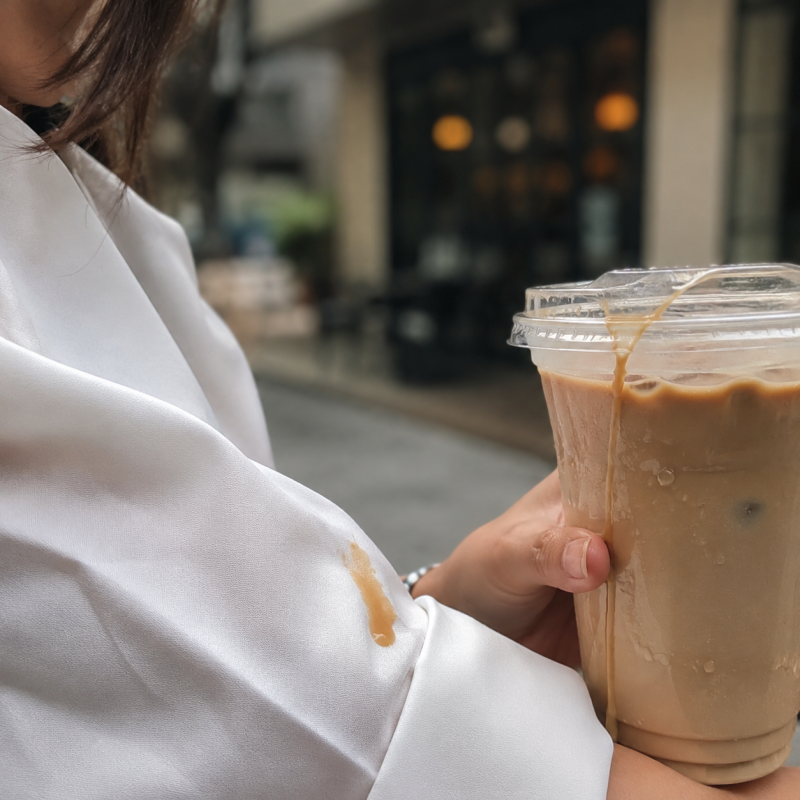
As a coffee shop owner or a manager in the beverage industry, you've likely faced this frustrating moment: a customer walks away with a fresh iced latte, only for the liquid to start seeping through the lid gap, staining their sleeve or car seat. While it seems like a minor drop, a leaking lid is a significant blow to your brand's professionalism and customer satisfaction. Often, business owners blame the staff for not pressing the lid hard enough, but the truth is hidden in a "micron-level" structural issue. In the world of cold drink packaging, the perfect seal is known as an "Interference Fit," and it's far more complex than just snapping a plastic ring onto a cup. Today, we'll analyze the science behind leak-proof lids and how a professional packaging factory prevents these invisible errors.
The 1mm Rule: Why Mixing Suppliers Destroys Your Cup Rim Fit
In an effort to reduce costs, many shops source their PET cups from one supplier and their coffee lids from another. While both might be labeled as "98mm diameter," the reality is that every factory operates with different mold tolerances. A difference of just 0.5mm in the rim diameter or a slight variation in the "locking bead" height can result in a lid that feels secure but fails under the slightest pressure.
At Kayrun, we treat the cup and the lid as a unified system—a "mother and child" relationship. During our R&D phase, we conduct mechanical simulations to ensure that the lid's inner channel and the cup's rolled rim are perfectly synchronized. When you choose a matched packaging solution from a single packaging factory, you aren't just buying two plastic components; you are investing in a calculated engineering solution. This systemic synergy is the first and most critical line of defense against leaks in your daily coffee shop supplies.
Lean Manufacturing: How We Ensure Every PET Cup Rim is Standardized
The secret to solving the leakage problem lies in maintaining absolute consistency during high-volume production. In the manufacturing of PET cups, the material undergoes a precise cooling process after being heat-formed. Because plastic naturally expands and contracts with temperature changes, minor deviations in shape can occur if the process isn't strictly controlled.
To address this industry-wide challenge, we have established a rigorous "Standardization Protocol." On our automated production lines, every stage of manufacturing is treated as a quality checkpoint. Our technical team monitors and adjusts cooling pressures in real-time based on environmental variables. Instead of relying on luck, we perform multi-stage quality audits before the products are packed. We ensure that only cups meeting our strict "true circularity" standards move forward. This commitment to consistency ensures that no matter which box you open, every cup will form a perfect seal with its lid, providing reliable cold drink packaging for your busiest hours.
Furthermore, we believe that mold precision is the cornerstone of quality. In our facility, mold maintenance is a top priority. Molds can develop microscopic wear over time, leading to "burrs" or uneven thickness on the cup rim. Our technicians perform regular high-precision polishing and calibration on all mold surfaces to ensure every rolled rim has a smooth, silk-like touch. This smooth surface is the physical foundation for achieving a true airtight seal. By managing our equipment with such discipline, we eliminate the hidden risks of customer complaints at the source.

The Science of the "Click": Why Material Elasticity Matters for Leak-proof Lids
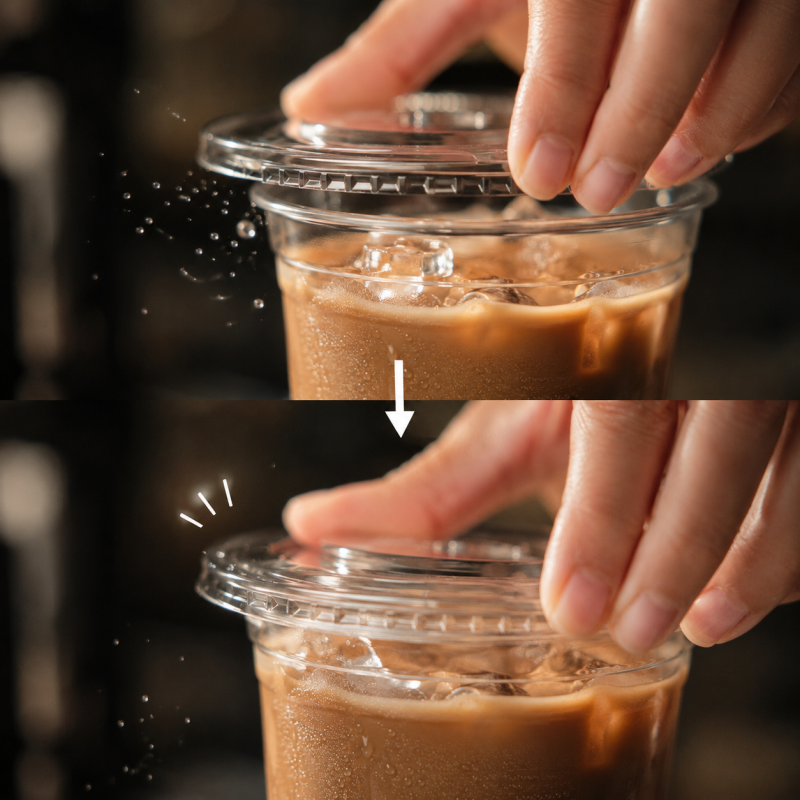
A high-quality lid should provide your baristas with a clear signal: that satisfying, audible "click." This sound indicates that the lid's locking rib has successfully passed over the cup's rim and snapped into its pre-set secure position. If the material formula is incorrect, the lid will either be too brittle and crack or too soft and warp over time, leading to a loose fit.
To achieve this ideal elasticity, we use a specific blend of high-tenacity polymers when manufacturing our wholesale coffee lids. This gives the lids "elastic memory," meaning they maintain a tight grip even as temperatures fluctuate during a hot summer day. Additionally, we have optimized the top vent hole design. A properly engineered vent balances the internal and external pressure, preventing the "piston effect" that can force liquid out through tiny gaps when the drink is shaken. These are the technical details we've perfected through thousands of real-world usage simulations.
Quality Packaging as "Experience Insurance" for Your Business
Ultimately, a cup is more than just a vessel; it is a brand ambassador for your shop. For any hardworking business owner, the cost of a single negative review or a delivery refund caused by a leak is much higher than the few cents saved by purchasing mismatched, low-quality coffee shop supplies. Choosing high-quality, high-precision packaging is, in effect, buying "experience insurance" for your customers.
When your guests can confidently carry their drinks through a crowded street or place them in a car cup holder without worrying about spills, you have earned their long-term trust. As a factory-direct partner, our goal is to handle the technical anxieties for you. Through disciplined mold management and standardized quality control, we provide products that are ready to perform from the moment you open the box. This summer, don't let a tiny leak drip away your hard-earned reputation. Choose a partner that understands the details of production, and ensure every drink reaches your customer in perfect condition.